The Context Collapse: Why Hyper-Personalization Is Breaking UX
We built systems that know users better than their closest friends. And now we're paying the price — in trust, coherence, and control.
Introduction: The Paradox Nobody Wanted
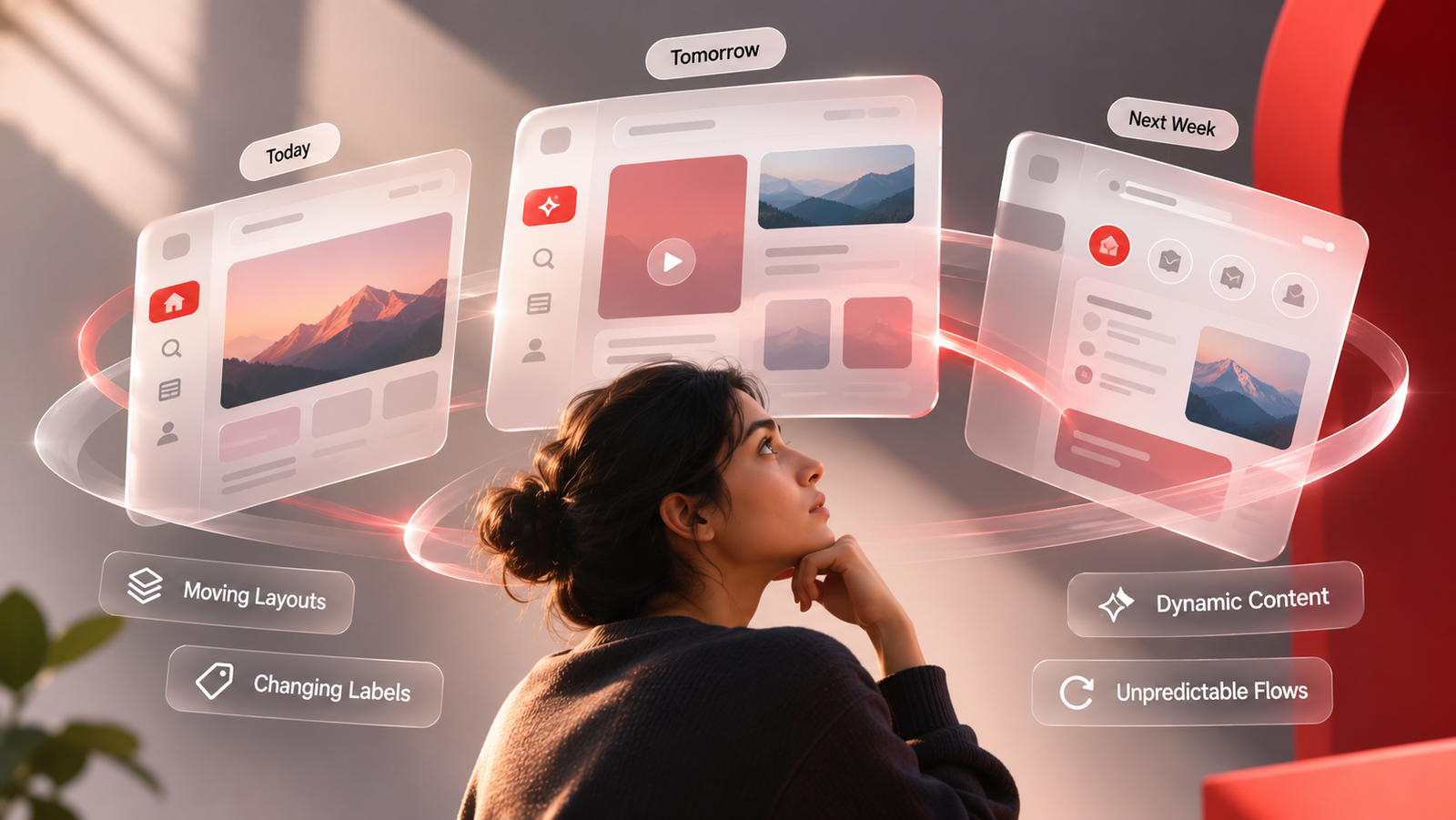
In the race to deliver "1:1 personalized experiences," the UX industry has engineered a quiet catastrophe. Products now adapt so aggressively to individual behavior that users are losing the ability to form stable mental models of the systems they use every day. Your banking app shows you a different dashboard layout than your colleague's. Your streaming homepage rearranges itself mid-session. Your productivity tool surfaces features it thinks you need — while hiding the ones you actually rely on.
This is context collapse — and it's the most underexamined crisis in modern UX.
The promise of personalization was simple: reduce friction by showing people what they want, when they want it, in the form they prefer. But as adaptive interfaces, generative UI, and AI-driven content curation have matured in 2025–2026, we've crossed a threshold. Personalization no longer feels like a concierge. It feels like a funhouse mirror — distorted, disorienting, and increasingly untrustworthy.
This post examines why hyper-personalization is backfiring, what it reveals about the deeper assumptions of UX practice, and where the industry needs to go next.
1. The Personalization Arms Race: A Brief History
Personalization in digital products has followed a predictable arc:
- 2005–2012: Rule-based personalization. "Users who bought X also bought Y." Amazon recommendations. Static segmentation (new vs. returning, geographic).
- 2013–2018: Behavioral personalization. Cookies, event tracking, A/B testing at scale. Products like Netflix and Spotify began building per-user models. The rise of the "algorithmic feed."
- 2019–2023: Machine learning personalization. Deep learning models predicting churn, lifetime value, and engagement probability. Interfaces began morphing based on inferred intent.
- 2024–2026: Generative and agentic personalization. AI doesn't just recommend — it generates. Layouts, copy, feature sets, and workflows are composed in real time. The UI is no longer a fixed artifact. It's a probability distribution.
By 2026, tools like Figma's AI features, Salesforce's Einstein, and Adobe's Sensei are capable of producing interface variations at a scale no human design team could match. The result is an ecosystem where no two users see the same product — and that's precisely where the problems begin.
2. What Is Context Collapse?
The term originates in sociology — Erving Goffman described how people manage different social contexts (work, family, friends) by presenting different versions of themselves. Digital platforms collapsed these contexts by making all audiences visible simultaneously (think: your boss seeing your weekend photos on Facebook).
In UX, context collapse has a new meaning: the erosion of a stable, predictable interface context. When a product adapts too aggressively, users lose the foundational cognitive scaffolding that makes an interface usable.
The three manifestations:
- Spatial instability. Buttons, menus, and content blocks move, appear, and disappear based on behavioral signals. Users can't build muscle memory or spatial models of where things are.
- Semantic drift. Labels, categories, and information architecture shift based on inferred intent. A feature called "Projects" yesterday becomes "Spaces" tomorrow because the AI determined that label resonates more with your profile cluster.
- Procedural amnesia. Users forget how they originally did something because the product keeps doing it for them. When the automation fails — as it inevitably does — they lack the manual model to recover.
This isn't theoretical. It's what happens when Spotify's mobile UI surfaces a different tab arrangement each quarter. It's what happens when Notion's AI auto-organizes your workspace and you can't find your notes. It's what happens when Gmail's Smart Compose becomes so aggressive you stop thinking about what you wanted to say.
3. The Science: Why Unstable Interfaces Cognitively Destabilize Users
The core issue is rooted in mental model theory — one of the most robust findings in cognitive science applied to UX. Users understand systems by building internal representations of how those components relate. Mental models enable:
- Prediction ("If I click here, I'll get X")
- Problem-solving ("If it's not working, I'll try Y")
- Efficiency (learned shortcuts and patterns)
When the interface keeps changing, the mental model degrades. Research by the Nielsen Norman Group has consistently shown that consistency is among the top usability heuristics for a reason. A 2025 study from the University of Michigan's HCI lab found that adaptive interface changes beyond a threshold of ~15% layout variation per session significantly increased task completion time and error rates.
The sweet spot is narrow. Users appreciate helpful personalization — a "Continue watching" row, a dark mode toggle they set once. What breaks them is unpredictable adaptation — a personalization system that changes things the user didn't ask to change, without explaining why.
The neuroscience is also relevant: cognitive load theory (Sweller, 1988) tells us that working memory is limited and precious. Every unexpected interface change taxes working memory, forcing the user to re-parse the layout before they can accomplish their task. Do this multiple times per session, and you get cognitive overwhelm — a state where users don't rage-quit, they just quietly disengage.
4. Real-World Cases: Context Collapse in the Wild
Case 1: Spotify's Perpetual Redesign
Spotify has been the most visible case. Over 2024–2025, the app introduced a personalized home feed that dynamically reordered sections, removed tabs for some users while adding new ones for others, and introduced a "DJ" AI feature that fundamentally changed the listening workflow. User backlash on Reddit and Twitter/X was intense — not because any single change was bad, but because the cumulative effect made the app feel alien to long-term users. The lesson: too many adaptive changes too fast destabilize loyal user bases.
Case 2: Google's Search Generative Experience (SGE)
Google's AI-overhauled search interface, rolled out more broadly in 2025, introduced answer summaries that varied radically in length, position, and format depending on the query and user profile. SEO professionals and researchers reported that the same query could yield structurally different results pages for different users. The result: shared reference points disappeared. Two people comparing Google searches couldn't confirm they were seeing the same information.
Case 3: Notion AI's Auto-Organization
When Notion rolled out AI-powered workspace organization in early 2026, many power users found their carefully curated folder structures reorganized by an algorithm that prioritized "relevance" over "intent." The system didn't understand that a user might keep a project folder at the top not because it's most relevant, but because it's emotionally significant. The fix — adding an "undo" and manual override — acknowledged the failure mode but didn't eliminate it.
Case 4: Enterprise SaaS and the "UI Kitchen Sink"
Enterprise platforms like Salesforce, HubSpot, and Jira have increasingly adopted AI-driven feature surfacing — showing sales teams dashboards and actions that the system predicts they'll need. But frontline sales reps report that the interface becomes overwhelming: too many suggestions, too many "smart" panels, too many autogenerated next steps. The tool thinks it's reducing decision fatigue. It's actually creating a new kind by making every option feel equally weighted.
5. The Trust Deficit: Why Users Are Pushing Back
Here's where it gets existential for UX teams. Context collapse doesn't just frustrate users — it erodes trust.
A 2025 Edelman Trust Barometer special report on digital products found that 67% of consumers said they were "uncomfortable with AI reshaping their digital experiences without explicit consent or visibility." This tracks with a broader pattern: users are beginning to associate personalization with manipulation.
The psychological mechanism is well-documented. When users discover that an interface is adapting to them — especially in ways they didn't opt into — they experience reactance, a motivational state to resist perceived threats to autonomy. This is the same phenomenon that makes cookie consent banners and retargeting ads feel creepy, but amplified: it's not just your data being used, it's your entire experience of the product being shaped by an opaque system.
The irony is devastating: personalization systems designed to make products feel more human are making them feel less trustworthy.
For UX leaders, the implication is clear. Trust is the new conversion metric. And trust requires transparency, consistency, and user agency — three things that hyper-personalization actively undermines.
6. The 2027-2028 Trajectory: Where This Is Going
Several converging trends will make context collapse more acute over the next two years:
6.1. Agentic UI Takes Over
AI agents (like those powered by OpenAI's Operator, Google's Project Mariner, or Anthropic's computer-use models) will increasingly act on users' behalf — booking flights, managing inboxes, filling forms. The UI will become not just adaptive but agentic, making decisions before the user even sees an option. This amplifies context collapse because the user's relationship with the interface becomes even more mediated and opaque.
6.2. Multimodal Interfaces Fragment Context Further
As voice, gesture, and gaze-driven interfaces (powered by devices like Apple Vision Pro and Meta's Orion glasses) become more common, the "interface" is no longer a screen with predictable elements. Context collapse becomes spatial and sensory — users must navigate not just what they see but where, how, and in what modality they interact.
6.3. Regulatory Pressure Will Force Transparency
The EU AI Act, GDPR's evolving interpretations, and emerging AI governance frameworks in the US and Asia will increasingly require that AI-driven adaptations be explainable and contestable. Products that silently reshape user experiences will face legal scrutiny. This will force a shift from "stealth personalization" to "negotiated personalization" — where users understand and control what's being adapted.
6.4. The Rise of "Calm Personalization"
The next wave won't be smarter personalization — it'll be quieter personalization. Inspired by the original Calm Technology principles (Weiser & Seely Brown, 1996), leading teams are designing personalization that operates at the periphery: subtle defaults, anticipatory loading, ambient adjustments that never force reorientation. The goal shifts from "surprise and delight" to "get out of the way."
7. Design Principles for the Post-Personalization Era
If context collapse is the problem, what's the design response? Here are five principles emerging from leading UX teams in 2026:
1. Stability by Default, Adaptation by Consent
Make the default interface stable and predictable. Let users opt into adaptive features, with clear onboarding about what changes and why. Examples: Notion's "Try AI organization" opt-in prompt. Gmail's "Smart features" toggle center.
2. Explain Every Adaptation
When the system changes something, tell the user — and let them undo it. A small "We rearranged your dashboard based on how you use it. [Undo] [Learn more]" banner does more for trust than any personalization algorithm.
3. Consistency Within Sessions, Personalization Across Sessions
Keep the interface stable within a session so users can build momentum. Save personalization updates for session boundaries — first load of the day, or after a login — so the user starts fresh but isn't disoriented mid-flow.
4. Embrace User-Maintained Mental Models over System-Optimized Layouts
If your A/B test shows that an AI-rearranged layout increases engagement by 12% but user satisfaction drops by 18%, ship the less "optimized" version. Engagement without satisfaction is a churn time bomb.
5. Design for "Cognitive Accessibility"
Treat cognitive load as the accessibility bottleneck it is. Everyone has limited working memory. Users with ADHD, anxiety, cognitive disabilities, or just a bad night's sleep all benefit from interfaces that don't shift beneath their feet. Cognitive accessibility is the next frontier after visual accessibility — and personalization is the biggest threat to it.
8. The Bigger Picture: What Context Collapse Reveals About UX Culture
The personalization crisis is, ultimately, a mirror for the industry's deepest biases.
For years, UX has been seduced by quantitative optimization — click-through rates, conversion funnels, time-on-task. Hyper-personalization is the logical endpoint of this thinking: if we can measure every micro-interaction, we can optimize it. But optimization has diminishing returns, and beyond a certain point, it optimizes for the system's goals rather than the user's experience.
Context collapse also reveals a theoretical blind spot in UX education. Most UX programs teach user-centered design but spend comparatively little time on cognitive stability, mental models, and the phenomenology of trust. We have libraries of patterns for onboarding flows and error states but almost no frameworks for evaluating whether an interface is tearing down a user's mental model faster than it's building one.
The fix isn't anti-technology. It's pro-wisdom. The best UX teams in 2026 are asking a fundamentally different question — not "How do we personalize more?" but "How do we adapt while preserving coherence?"
References
- Goffman, E. (1959). The Presentation of Self in Everyday Daily Life.
- Sweller, J. (1988). Cognitive load during problem solving: Effects on learning. Cognitive Science, 12(2), 257-285.
- Nielsen Norman Group. (2025). Usability Heuristics: Consistency and Standards.
- Weiser, M., & Seely Brown, J. (1996). Calm Technology. Xerox PARC.
- University of Michigan HCI Lab. (2025). Adaptive Interface Variance and Task Performance.
- Edelman Trust Barometer. (2025). Special Report: Digital Product Trust.
- Spotify Engineering Blog. (2025). Personalization at Scale: Lessons from the Home Feed Redesign.
- Apple Human Interface Guidelines. (2026 Edition). Adaptive Interfaces section.
Was this article helpful?
Earn Design Maestro badge and 22 XP reward
The Context Collapse: Why Hyper-Personalization Is Breaking UX Quiz
Sign in to attempt this quiz and earn Xperience XP.
Login to Attempt Quiz